
Parent & family handbook
Academy in the Wild
Everything you need to help your child prepare for forest school.
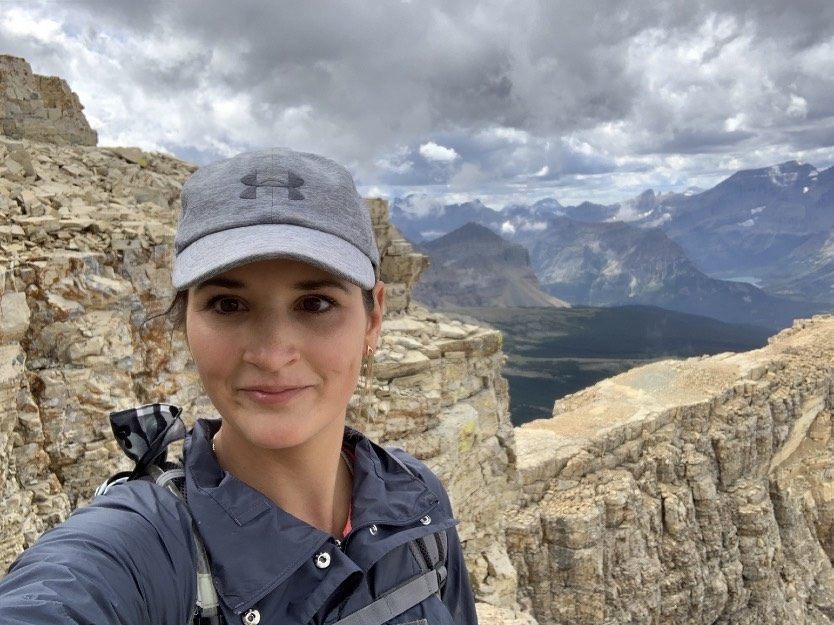
"I have always been in love with nature — a place to go for hours and let my imagination run wild, creating worlds within worlds. My magical forest is what motivates me now to foster those same experiences for our young children today."
Welcome
We're so glad your family is joining us. This handbook introduces who we are and helps you and your child feel ready for the woods.
Welcome to Academy in the Wild
We are excited to be sharing adventures in the wild with your children. The main purpose of this handbook is to introduce you to us and to help you and your child prepare for the season ahead.
During our programs we share the responsibility of protecting the health, safety, and well-being of your child, and the policies inside are designed to do exactly that. Please read through, ask questions, and talk any of it over with your child before the program begins.
Have a question about anything enclosed? Reach out any time — we look forward to lots of fun in the wild.
Our mission is to inspire children to grow wild
Academy in the Wild believes every child should have the chance to play and learn from the natural earth through child-led, play-based learning. Children are intrinsically motivated to learn — they do it by exploring the world around them. Our goal is to give them repeated access to nature, time and space to investigate, and a genuine sense of wonder, helping grow the future stewards of this land.
About forest schools
Forest schools began in Europe in the 1950s and have since spread around the world. They are founded on trust, relationship, and freedom. Children spend most of the day immersed outdoors, where time is unhurried and there is space for reflection, collaborative creation, and healthy risk. The benefits develop the whole child — social, emotional, physical, and cognitive. A few of the core principles we hold to:
- Takes place in a variety of natural places, with regular repeated sessions in the same space
- Views children as competent, capable learners and values multi-age learning together
- Led by qualified Forest and Nature School educators
- Values play, and sees the chance to experience risk as an integral part of learning
- Uses loose, natural materials for open-ended experiences — and values the process as much as the outcome
How we learn
Humans learn best through construction (building and making things), cognition (observing, processing, predicting), and community (thriving among a group of people). Forest school is designed so all three happen naturally, through an ongoing relationship with the land, a dedicated educator, one another, and themselves.
A place we believe is magical
We spent countless hours hiking the coulees to find our gathering places — spaces with everything children need: loose parts, mud, clay, sand, trees, bushes, safe low- and no-current shallow water (which ices over safely in winter), and a fire pit. We're also a short walk from shelter in case of sudden weather.
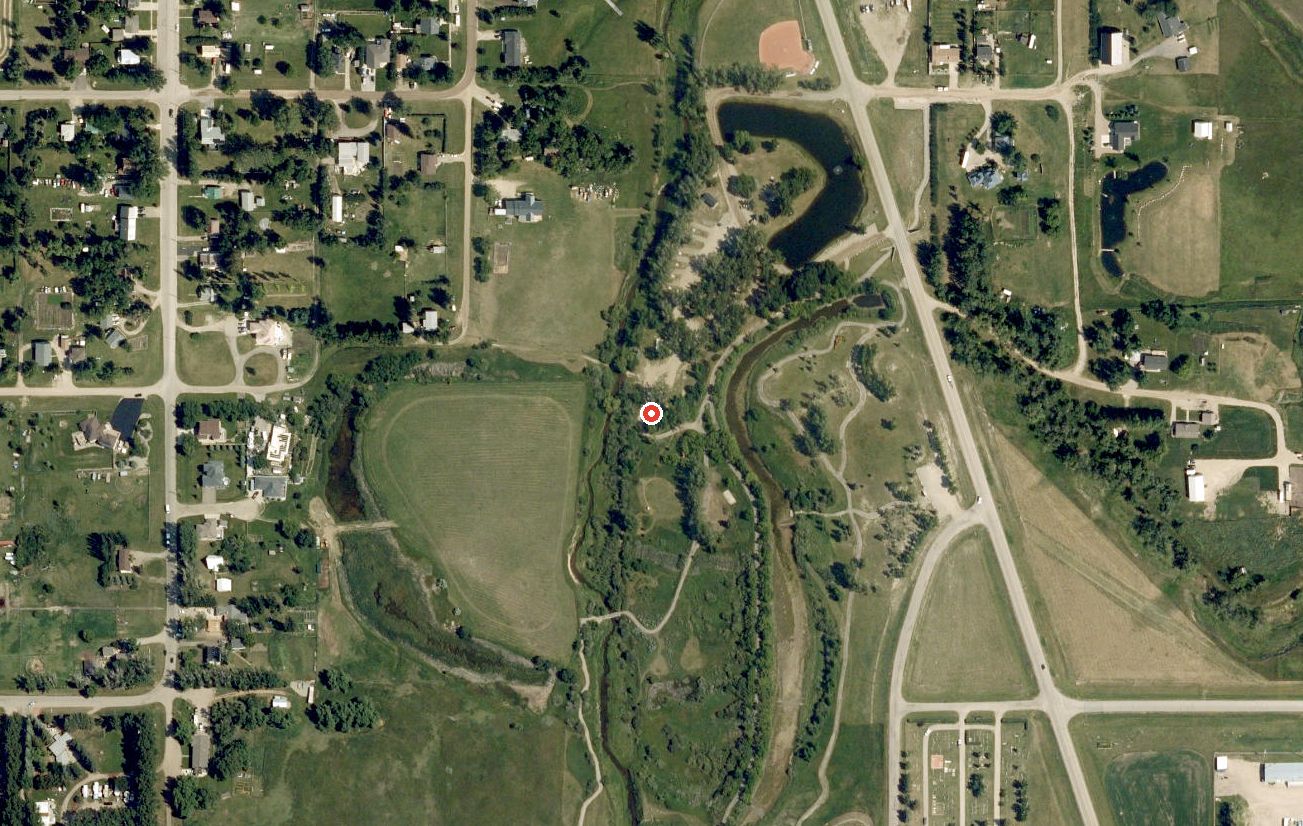
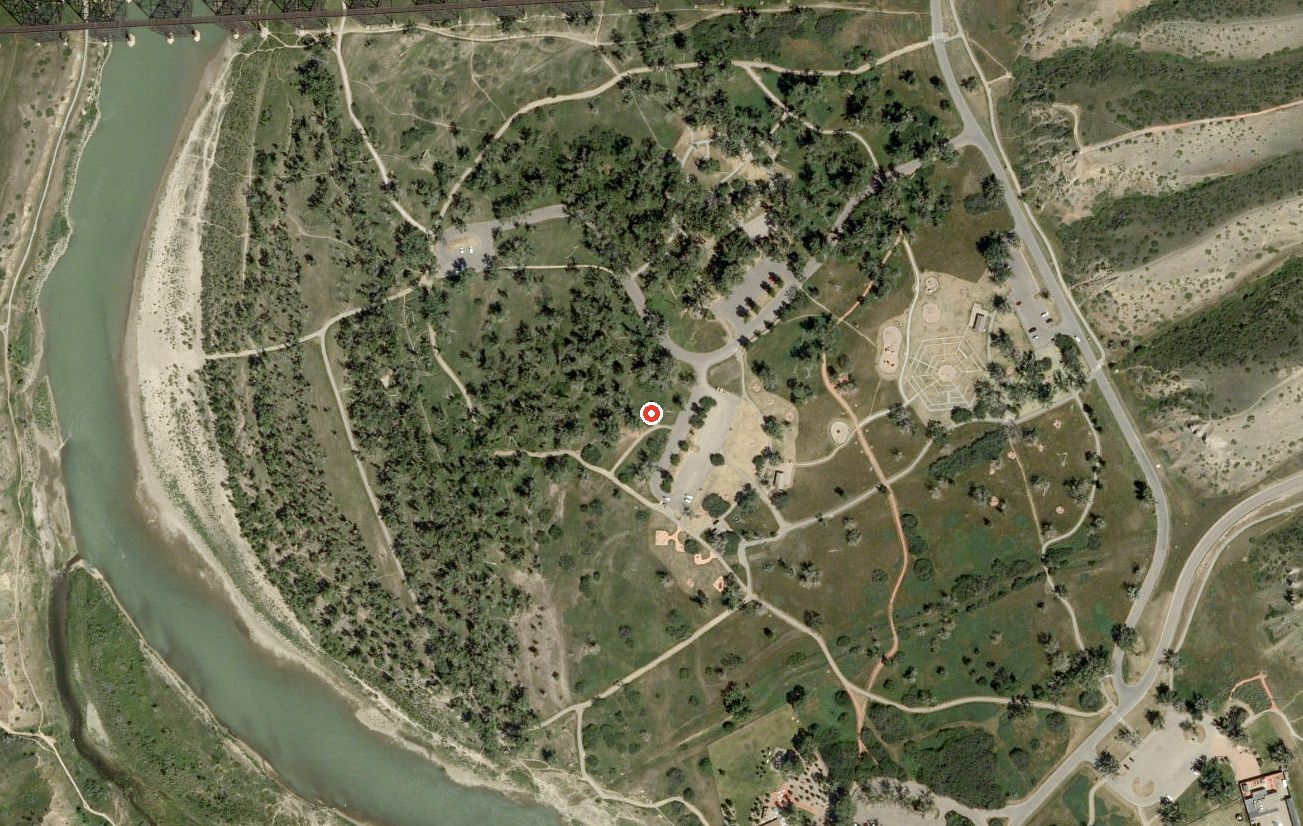
Where we run
We gather in two communities — Magrath and Lethbridge — each with a Coyotes group (ages 3–8) and a Rattlers group (ages 7–12). Our Lethbridge site is in Indian Battle Park.
Preparing for forest school
Enrolment, rates, and the practical rhythm of a forest-school day — plus how to dress and pack for every season.
Securing your child's spot
A $30 non-refundable deposit per child secures your child's place. Full payment is due two weeks before the start date of your program.
| Location | Program | Ages | Per season |
|---|---|---|---|
| Magrath | Coyotes | 3–8 yrs | $275.00 |
| Magrath | Rattlers | 7–12 yrs | $275.00 |
| Lethbridge | Coyotes | 3–8 yrs | $350.00 |
| Lethbridge | Rattlers | 7–12 yrs | $350.00 |
Seasons run Fall (September–November), Winter (February–April), and Spring (April–June).
How to pay
E-transfer is preferred — send to payments@academyinthewild.com. Cash and credit card are also accepted. No refunds are given for days missed due to illness, weather, emergency closures, or statutory holidays. If a session is cancelled due to our staffing, we'll add a make-up day or refund it at our discretion.
Arriving ready
The first morning is full of energy and excitement — we're all eager to get to the forest, but first we make sure the important bits are in place. Please arrive 10–15 minutes early to your very first session so we can meet you, do a little admin, check clothing and gear, and answer any last questions.
When everyone's ready, a quick goodbye helps ease any separation nerves before we head off into the woods.
Our rhythm of the day
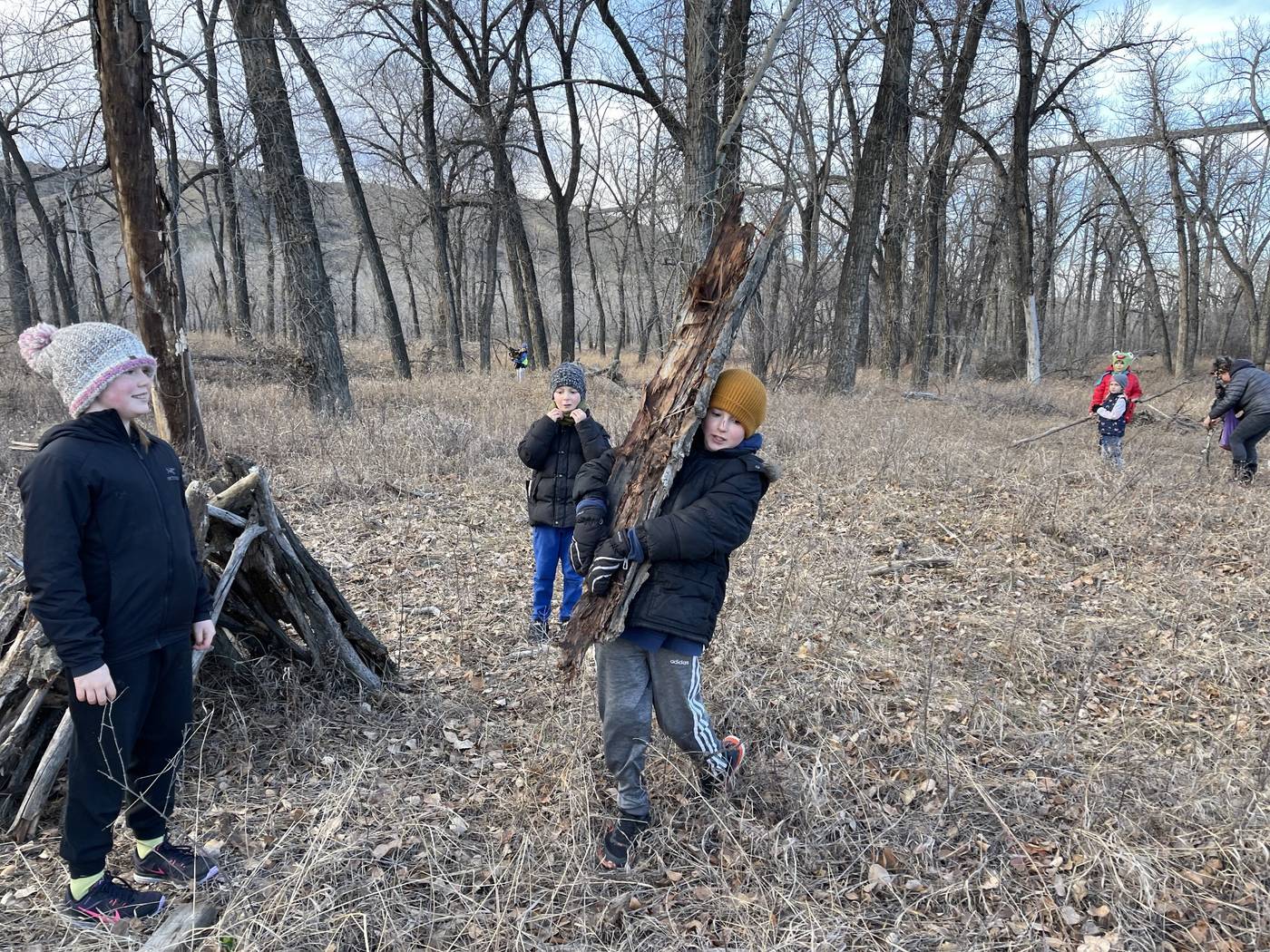
There's a general rhythm to each day, but our schedule is flexible — the weather, the child's interests, the woods, and the animals present all shape our time together.
Keeping pick-up safe
We only release children to a Primary Contact, Emergency Contact, or another person named on the enrolment form. Everyone authorized for pick-up — parents included — should be ready to show photo ID.
Sign in and out happens on paper at a picnic table right by the parking spot. We ask that your child is walked to our meeting spot and signed in each day; from there we generally travel into the woodland once goodbyes have been said.
Dressed for the weather, ready to play
It's the parent's responsibility to make sure your child is dressed for each session. Check the forecast each morning and dress for extended outdoor play — it keeps children happy, comfortable, and safe. Clothes will get dirty, wet, and sometimes ripped; second-hand shops and marketplace finds work wonderfully. If your child doesn't have the right gear, let us know — we keep an extras bin to borrow from.
The three layers
Base layer wicks moisture from the skin. Middle layer traps warm "dead-air space." Outer shell is warm, waterproof, and windproof — note that water-resistant is not the same as waterproof. Best footwear: two wool socks and boots a size too big for insulating air.
Warm & waterproof
- Base · thermal top & bottoms, wool socks
- Middle · fleece pants + fleece/wool top (add 2–3 on cold days)
- Outer · waterproof snowsuit, insulated boots with removable liner (Sorel/Columbia)
- Wool toque, neck warmer or balaclava, insulated waterproof mittens on a string, hand/foot warmers
Layered & ready for mud
- Base · thermal top & bottom
- Middle · wool or fleece top & bottom (extra in backpack)
- Outer · waterproof rain pants + jacket / muddy buddy, closed-toe or rubber boots
- Thin toque, light gloves, wool socks, optional sunblock
Covered & sun-safe
- Base · long pants & long sleeves (guards against scratches, ticks, bites), light socks
- Outer · closed-toe waterproof shoes, waterproof pants & jacket
- Wide-brim or ball cap, sunblock & bug repellent
A few golden rules
Dress in layers — easier to shed than to be caught short, and wooded areas run cooler and damper. Stay away from cotton (it holds moisture and chills); choose wool or synthetics that insulate even when wet. Mittens beat fingered gloves for little hands. Label everything, on the body and in the pack. For your child's safety, we reserve the right to refuse participation on a day with improper clothing or footwear.
A sturdy backpack, packed together
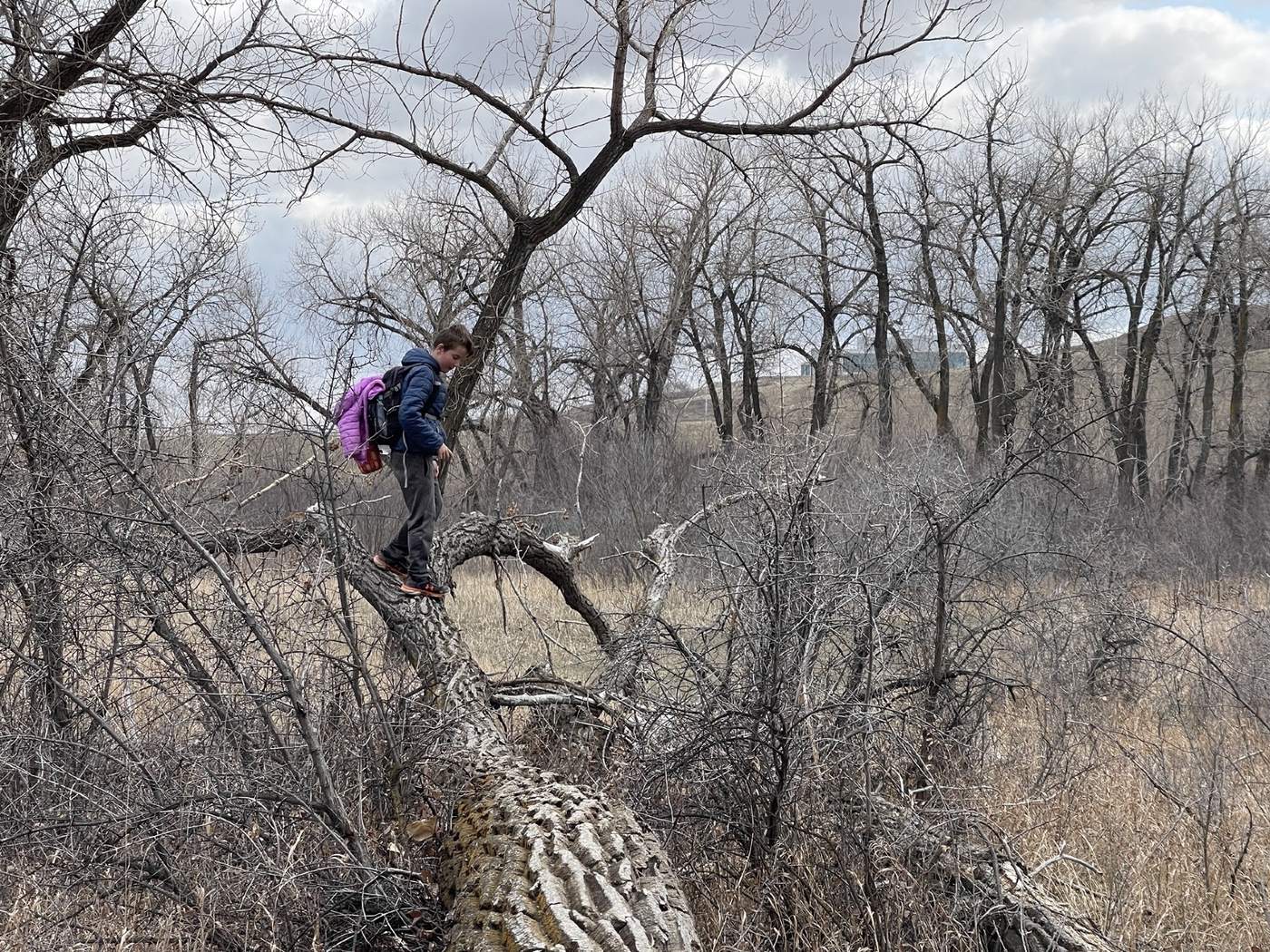
Please pack a sturdy backpack that fits your child — with their help, so they know what's inside and where to find it. Put any lifesaving medication somewhere easy to grab and point it out at each day's sign-in. Keep it light: children carry their own packs between sites, and all tools and equipment are provided by us. Please don't send tools or knives from home unless we've asked.
- Small full water bottle they can open
- Healthier, litter-less snacks in a container they can manage
- Extra underwear (ages 3–7)
- Extra wool or synthetic socks
- Spare clothing in a plastic bag
- A plastic bag for dirty clothes
- 3 clean bread bags (feet stay dry if boots get wet)
- Hand warmers, reusable or throwaway
- Tissues in a small ziplock
- Small dry hand towel
- Lifesaving medication (e.g. EpiPen)
- All extra clothing from your season's list
Please leave at home
- Toys
- Pocket knives or other tools
- Electronic devices — phones, music players, gaming devices
On nicer days, please arrive with sunscreen and bug spray already applied. After you register, we'll email a printable clothing-and-backpack checklist for your fridge.
Fuel for busy bodies
Food is fuel — outside and active, children's appetites will tell them so, and a little food keeps energy and moods high. We wash or sanitize hands before snack time.
- Bring litter-less snacks where you can, to reduce the trash we produce
- On colder days, a thermos for something hot is lovely
- Make sure your child knows which containers are theirs and how to open them
- If anyone in the group has a nut allergy we run a strict nut-free zone, and email parents ahead of time
- We ask children not to share snacks, for everyone's health and safety
Lost items
We're not responsible for lost or stolen items on site, so please label everything. Anything found is placed in our Lost & Found.
Health & safety policies
The policies that keep every child protected — please read these carefully and reach out with any questions.
Two weeks before we begin
To take part, we need the following completed two weeks before the start date:
- All registration forms completed
- Informed consent / liability waiver signed
- Payment in full
Privacy
Any personal data we hold — including photographs — is processed strictly in line with privacy legislation and used only for the purposes you've consented to on the enrolment form. We won't share details with third parties without consent, except where legally required.
How refunds work
Refunds are given only in extreme circumstances that prevent a child from participating, assessed case by case.
- No refunds within 2 weeks of the start date, or during a program, unless the spot can be filled
- No refunds for a day cancelled due to weather or a child's illness
- A full refund is given if a program is cancelled due to insufficient registration
Staying home when unwell
Please keep participants (children, educators, and volunteers) home for at least 24 hours after symptoms subside for: a temperature at or above 38 °C / 100.4 °F, diarrhea, vomiting, pink eye, or any contagious illness. If these arise during a session, we'll contact you to pick your child up right away.
For communicable illnesses — measles, pink eye, chickenpox, mumps, flu, strep, viral pneumonia and the like — a child may return once their health-care provider says it's safe. Any outbreak or lice treatment is communicated to families through your preferred contact method.
Food allergies
If a child in your session has a nut allergy, we run a strict nut-free zone and notify parents by email before the program starts. We also ask children not to share snacks.
Empowering, and carefully managed
Tools are a powerful part of forest school, brought out only once staff know the participants and have assessed each child's maturity, interest, focus, and ability to follow clear guidelines.
- An educator checks all tools before use, and safe use is demonstrated first
- Tools are counted out and counted back in
- Children are closely supervised until deemed competent to work with limited supervision
- Safety guards go back on immediately after use, and everyone stays outside each other's "safety bubble"
Fires
Fire safety is demonstrated before use. Participants only light fires under direct supervision, a burns kit and water stay close by, and every fire is fully extinguished at the end of a session.
Ticks are a natural part of the woods, mostly in spring. If one is embedded, use tweezers to pinch as close to the head as possible and pull out slowly — don't burn, smother, apply alcohol, or squeeze the body, as that can release infected fluids. A nurse at 811 will gladly walk you through it. If you find a tick after a session, please let us know so other families can be informed.
Safe and enjoyable, always outside
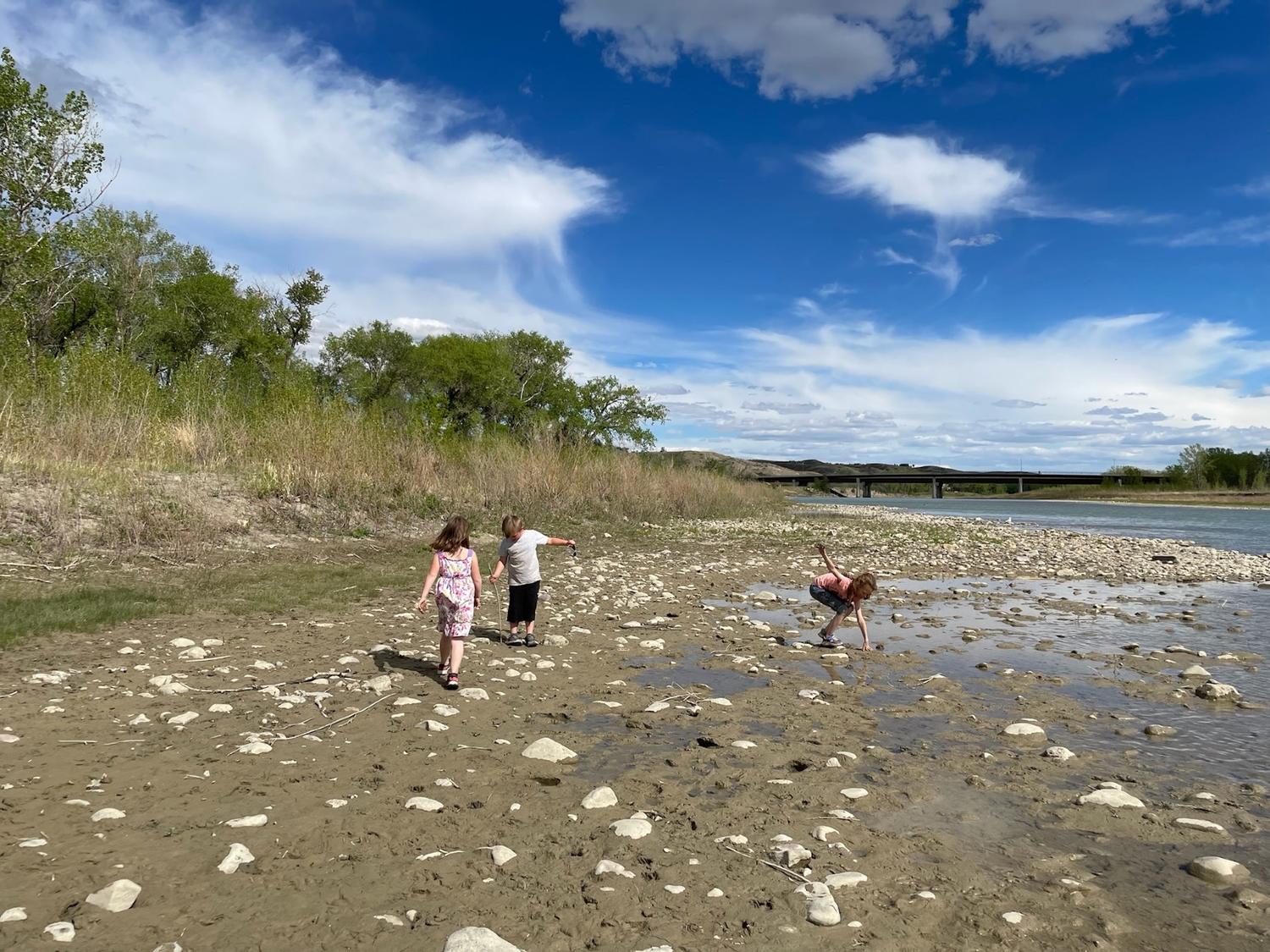
We intend to run every session, but it must be both safe and enjoyable. Programs are entirely outdoors, and we reserve the right to postpone or cancel for unsafe weather or other circumstances affecting health and safety.
- In high but safe winds, we stay closer to open areas
- With forecast thunder and lightning, we keep children near shelter to move under quickly
- In extreme cold (−20 °C or lower) or heat (30 °C or above) we may cancel or limit exposure by age, constantly checking comfort
- If dangerous weather develops mid-session, educators gather the children, seek shelter, and stay until it passes; if we must cancel, families are called to arrange pick-up and educators remain until every child is collected
First aid
A first aid kit rides in the lead educator's backpack every session, well-equipped for scrapes, cuts, slivers, and blisters. An educator certified in First Aid and CPR is present at all sessions, and our emergency procedures are carried on-site and known to every facilitator.
A proactive commitment
Academy in the Wild takes a proactive position on child protection. In accordance with the Child, Family and Community Services Act, we are required to report immediately if we suspect abuse has occurred or that a child is at risk.
Risk assessment & management
Risk is an inherent part of forest school, and learning to manage it is a valuable life skill — part of what makes our program unique. Educators continually assess and manage on-site risks while involving children in the process so they build these skills themselves. Risks children may encounter include chill from improper gear, slips and falls on uneven ground, insect stings and tick attachment, and scratches from thorns or a twig swinging back.
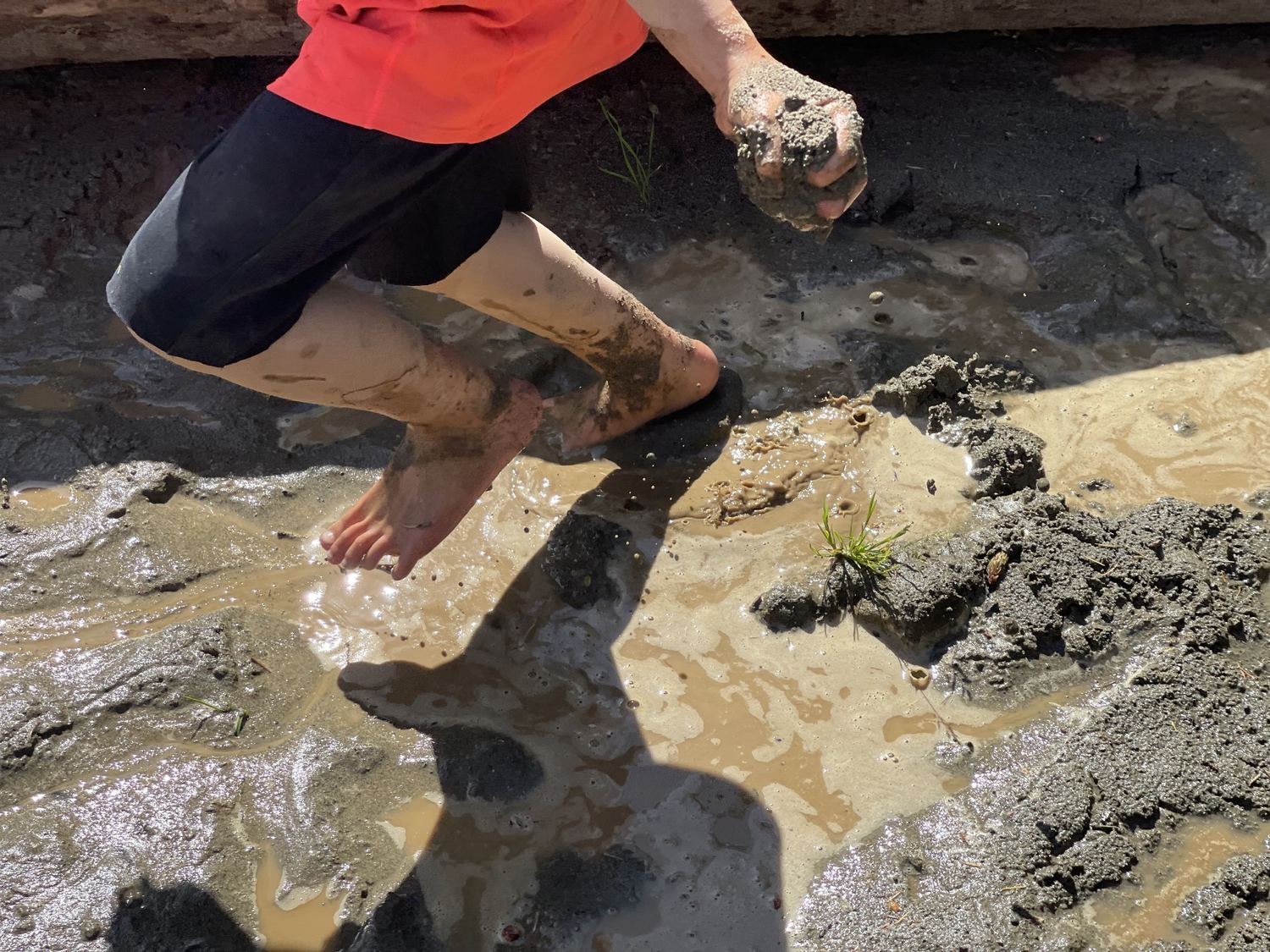
Our team & the land
The people who care for your child, how we work with behaviour and communication, and our commitment to the land we share.
A 1:6 educator-to-child ratio
Our maximum educator-to-participant ratio is 1:6, so every child is heard and stays safe. Our facilitators have experience working with children in the outdoors — the most critical factor in keeping your child safe — and a genuine passion for sharing nature. Our role is to:
- Spark engagement by modelling enthusiasm for nature play
- Observe — once children are exploring, we step back to give them space to grow
- Learn alongside — we get dirty, build, create, and celebrate with the children
- Stay safe and create connections, helping children through the conflicts and discussions that arise
All educators hold current standard First Aid and CPR, plus a Criminal Record Check with Vulnerable Sector Screening.
Proactive, positive, developmentally aware
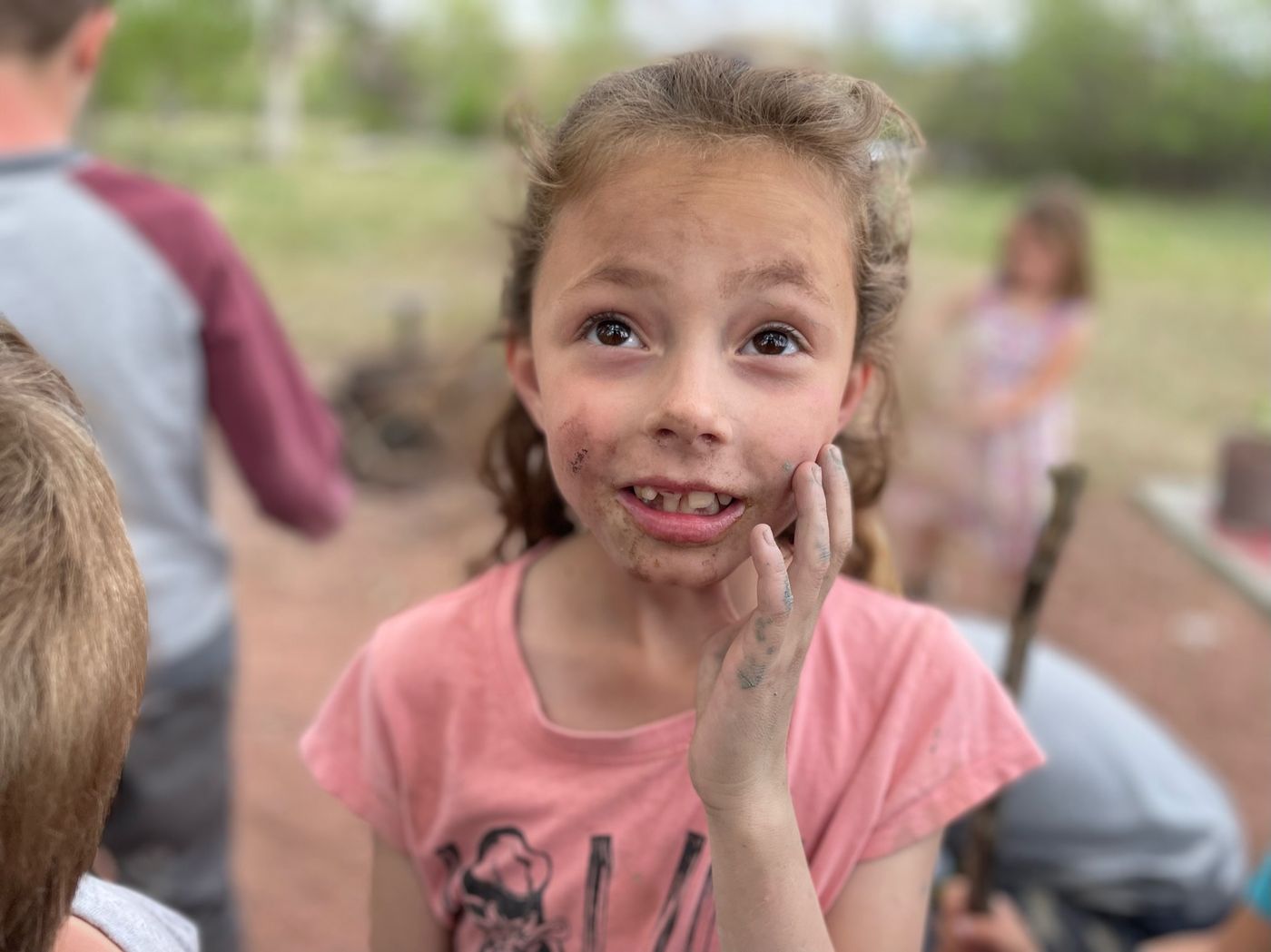
We create spaces that are developmentally appropriate for children. Corporal punishment and any abuse, harassment, or foul language are explicitly prohibited. Young children run on heightened emotions, and we do our best to work through situations safely and positively, assessing each one individually. Our approach focuses on the behaviour rather than the child, keeps expectations clear, stays positive and consistent, and involves parents when something recurs. We reserve the right to suspend or expel a child whose behaviour is unsafe for themselves or others; if that happens, we'll talk it through with you.
Staying in touch
We promise not to be on technology while we're with your child — though we'll occasionally take out a camera to capture a moment of play. If you need us during a session, please call so we hear the phone ring. Between sessions, email or text is best. Please always let us know if your child will be late or absent, or if anyone in your group has a communicable illness or is being treated for lice. In an emergency we contact families by phone once emergency services (if needed) have been reached.
Your child's experience — and the happiness of everyone involved — matters greatly to us. Please never hesitate to reach out by text, email, phone, or in person. We'll make every effort to resolve any concern promptly, and always in confidence.
Caring for a shared land
We strive to care for this land, which was originally the gathering, traveling, and hunting routes of the Blackfoot nation. They marked this land with their footprints before us, and it's our job to keep stewarding it so its beauty and diversity remain for the generations yet to walk it.
Environmental sustainability
Sustainability is at the heart of our programming. We immerse children in nature while fostering an ethic of care for it, running ongoing ecological site assessments to identify, monitor, and limit our impact. We photograph our sites three times a year to compare our footprint, rotate locations, stay on established trails, and keep higher-impact activities to already-disturbed areas. We encourage natural art from loose parts and reusable materials, and — following "leave no trace" — everything we set up is taken down at each session's end.
Now that you know us — let us know if you have any more questions. We hope to see you in the wild soon.